Wade With Us: A Season of Water Science Begins
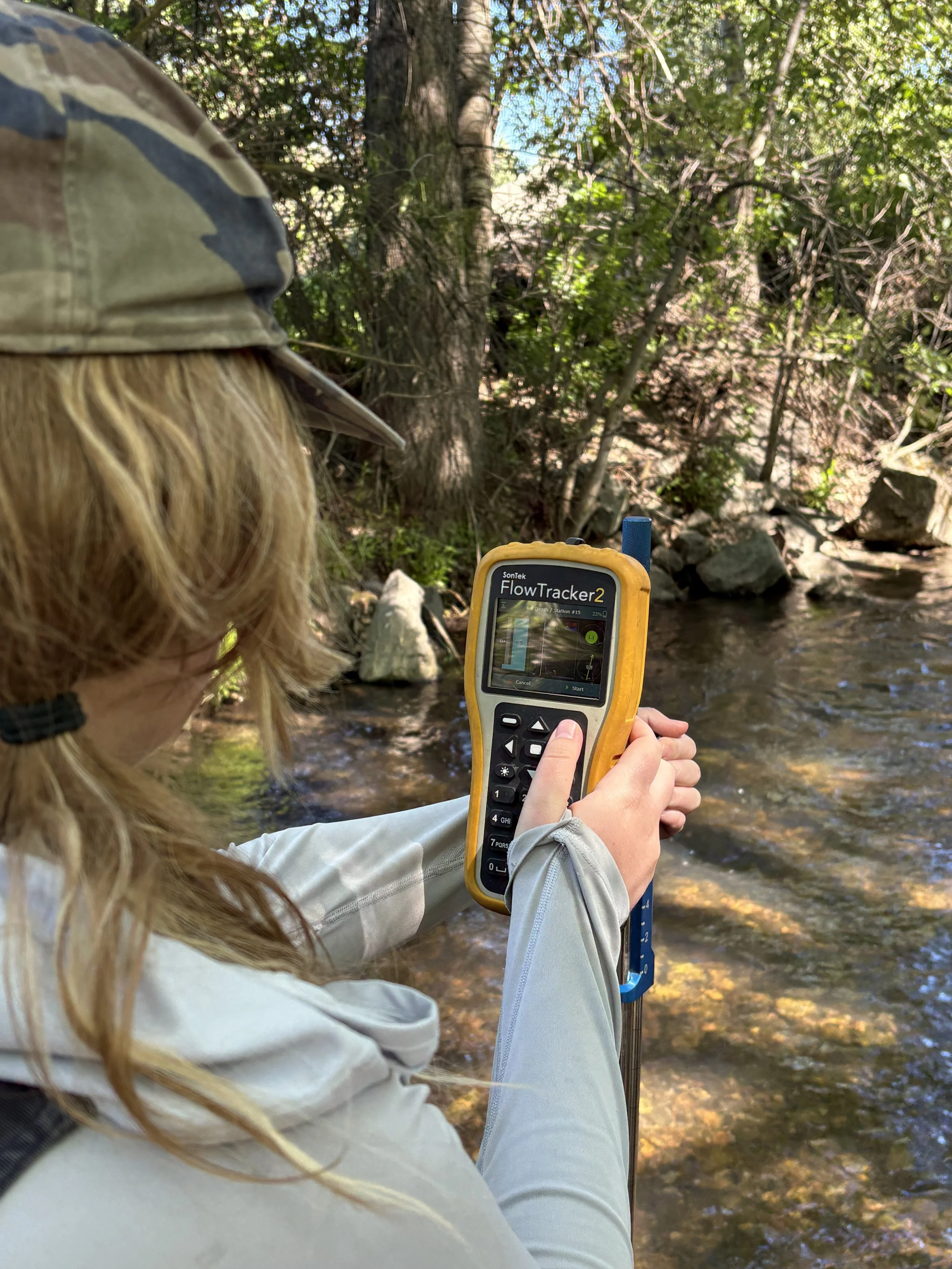
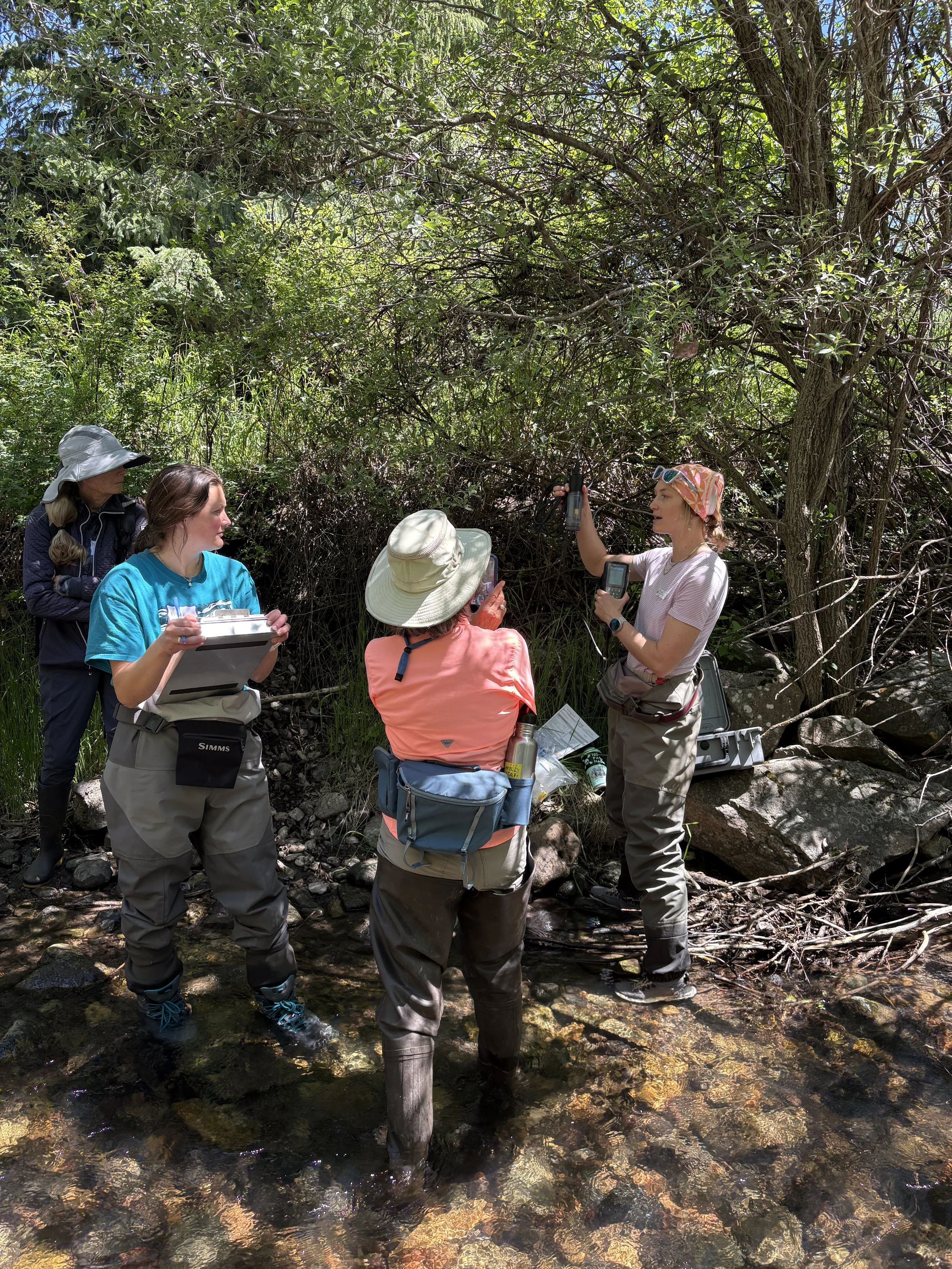
A Stream Teams Volunteer takes flow measurements using the Flow Tracker 2.
The Stream Teams are back, taking to the rivers and streams with their waders and clipboards like migratory birds after a long spring. Stream Teams is a program that has been facilitated by GWC and the Gallatin Local Water Quality District (GLWQD) since 2008. The program helps to maintain long-term surface water monitoring and brings our local community into the watershed to learn about the rivers and streams in our backyards.
This year, many people expressed interest in being involved in surface water monitoring and our volunteer slots filled in record time (less than a week)! This represents something special happening in our community because people - like you - really care about having a relationship to the natural resources around you, and being involved in taking care of them. We call this action and relationship watershed stewardship, because it embodies reciprocity.
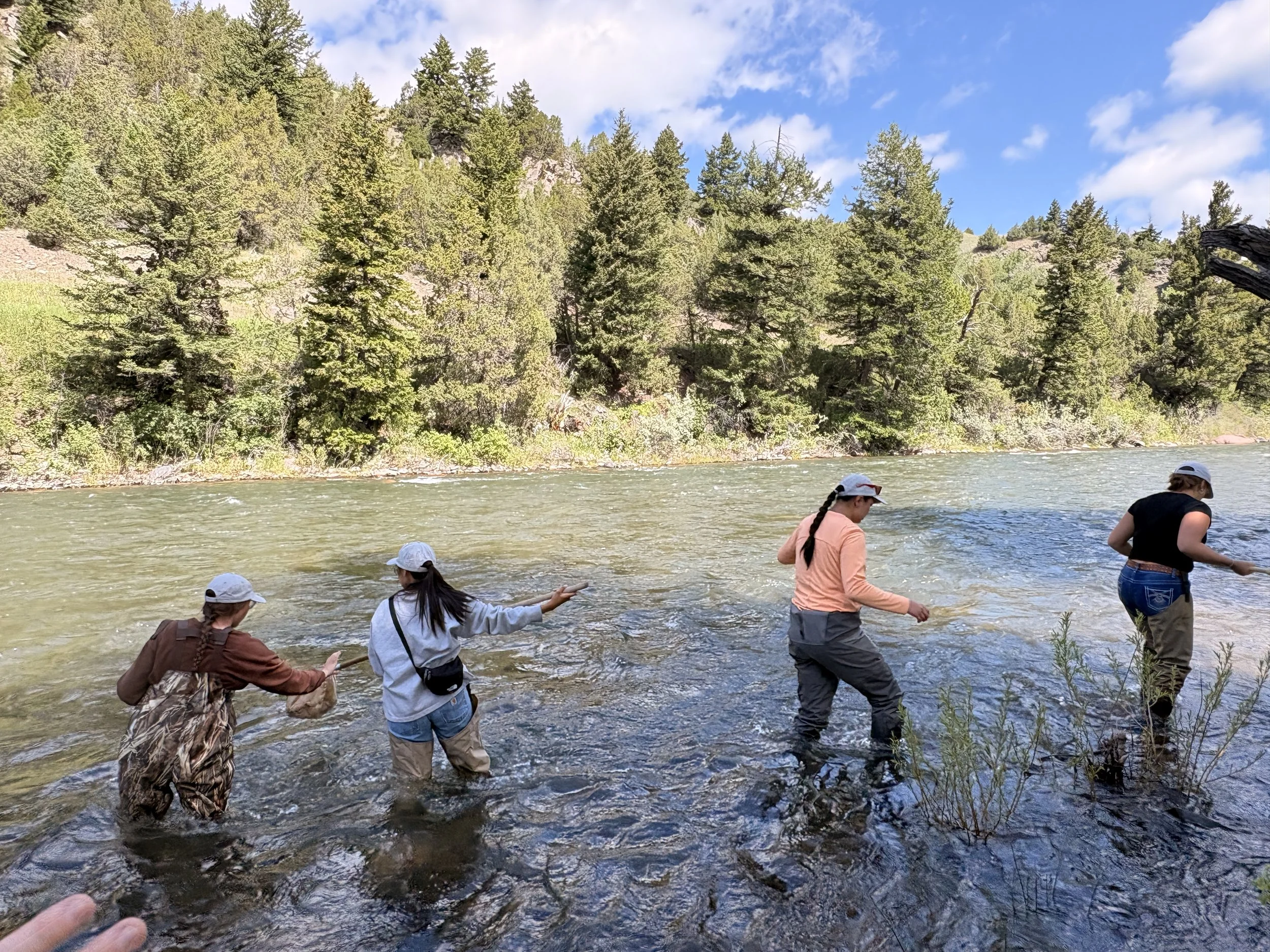
So, what do Stream Teams volunteers do? Imagine you’re standing in a stream, observing as the water rushes downstream. You are using a flow meter, and writing down things like water temperature and the rate at which water is moving past you. You measure the distance across the stream, and measure at different points across it. Then, you collect samples from the center of the water column in pre-labeled bottles. These get sent to the lab to be analyzed for nutrients and sediments that are often invisible to the eye. Every data-point that gets collected wouldn’t exist without a person behind it. These points become part of a larger dataset that holds the past, present and future of our watersheds in 1’s and 0’s.
Why is monitoring important? Monitoring our streams is kind of like going to the doctor’s office and getting your blood drawn - the information stored in your body can tell your doctor a lot about your health. Having community data on water health is important because local organizations rely on it to inform restoration projects and help prioritize waters that need a little extra care.
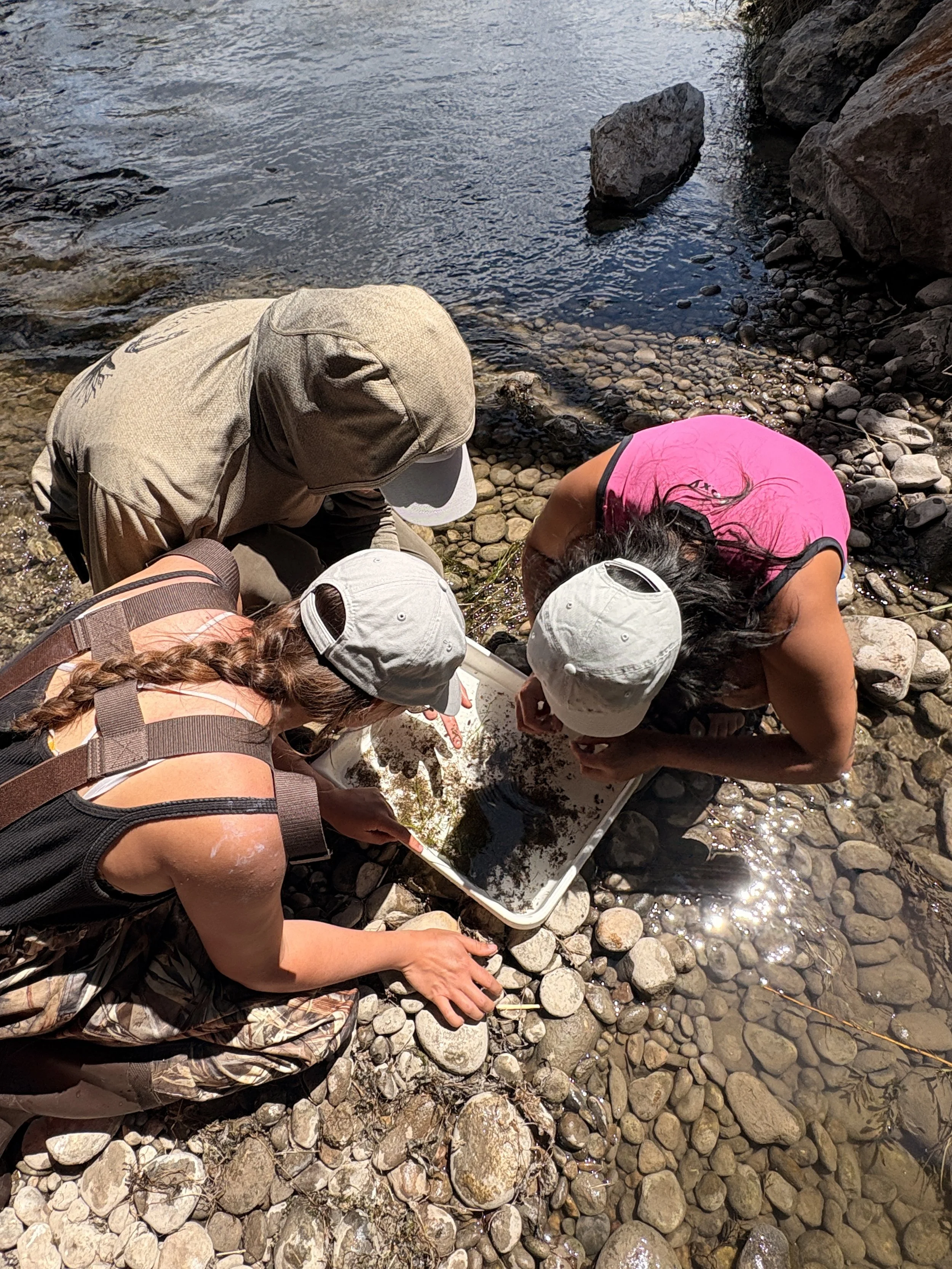
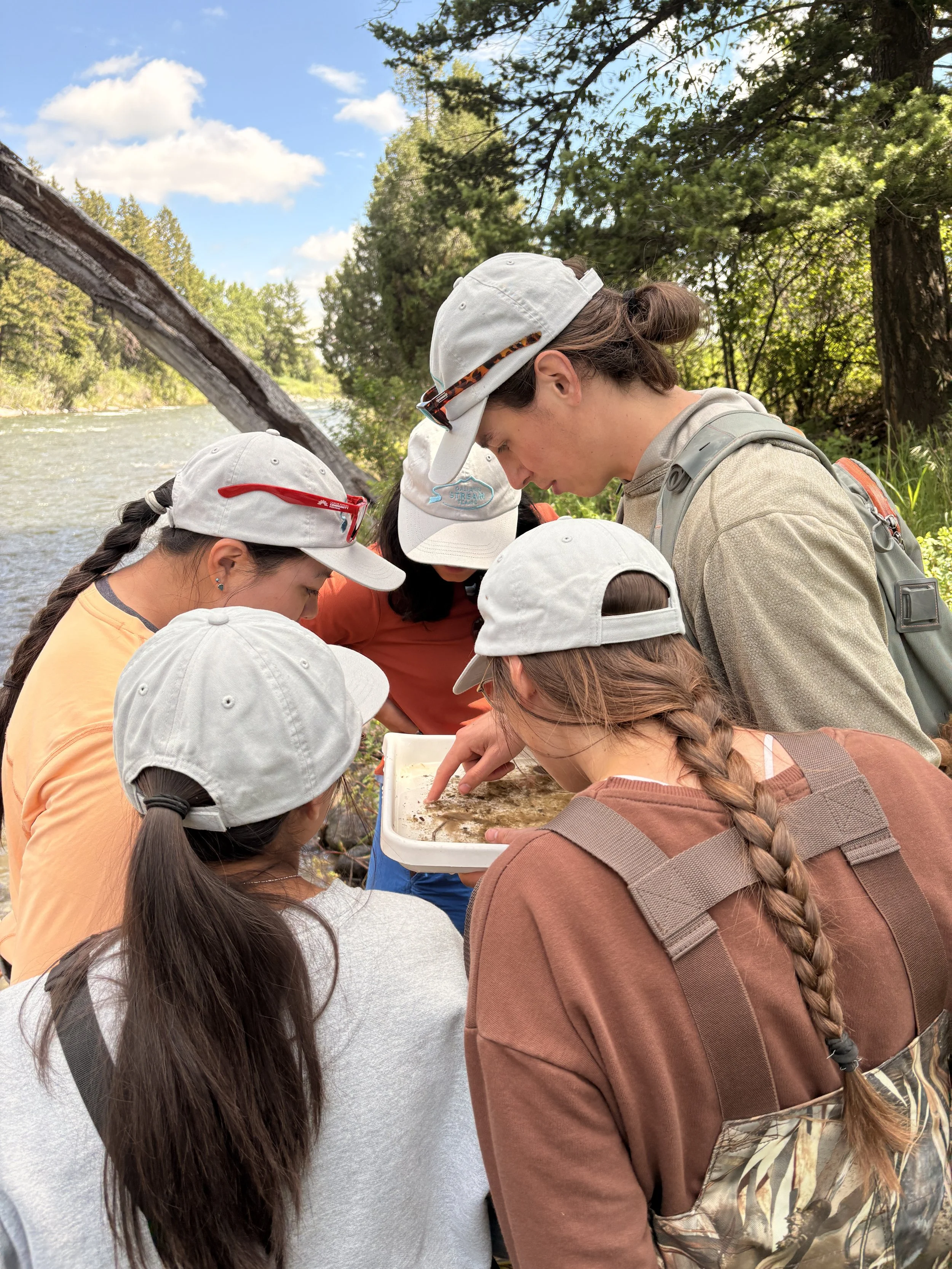
When we collect the information we need to assess stream health over time, we also gain presence and connection. Last week, we didn’t just collect data. We watched a garter snake slide through the water, and noticed how wild rose bushes and dogwood plants scaffold the river banks. We observed tiny stoneflies clinging to rocks, and tried our best to imagine their underwater world. These experiences give us a real sense of place and kinship. While our volunteers help us collect data that is critical for maintaining our water resources, the time spent in the river is just as vital. Community exists here, and we’re here to build it with you.
Follow along with us this season!
Written by Ingrid Peters