State Plans to Measure Surface Water Quality Differently
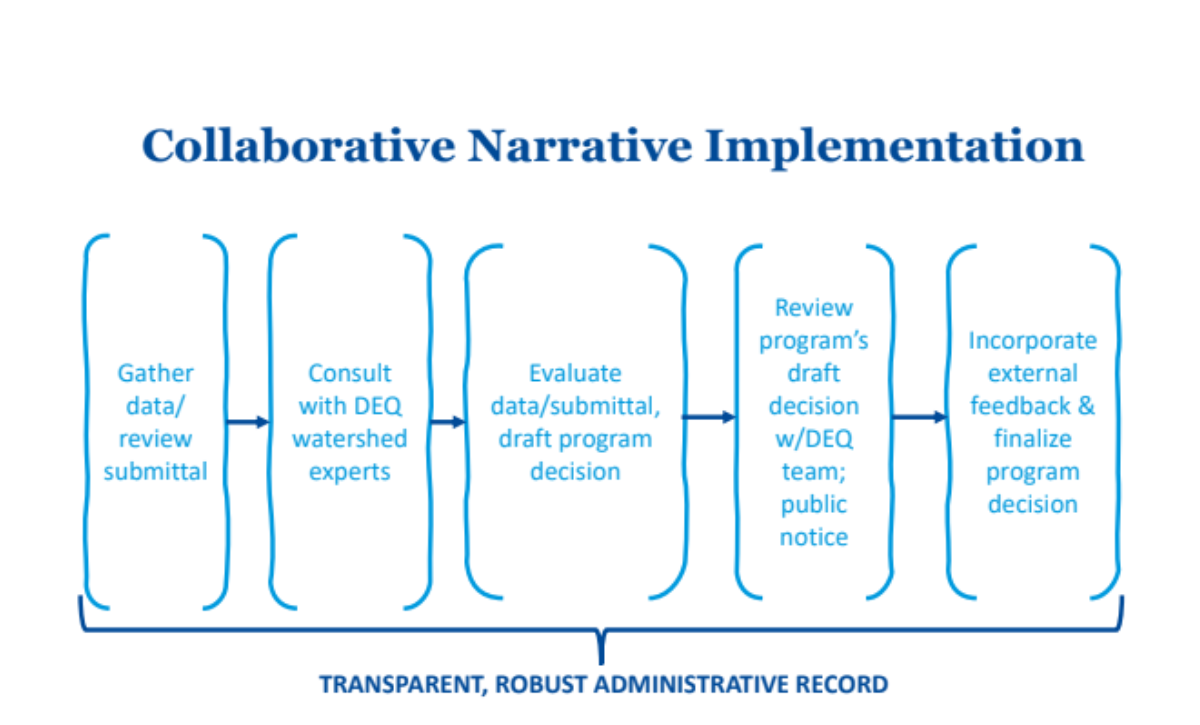
A diagram taken from the slides provided by DEQ at the February 10th Lunch and Learn Session.
During the 2025 Legislative Session, Montana House Bill 664 revised the state’s water quality standards by repealing “numeric” nutrient criteria and requiring the Montana Department of Environmental Quality (DEQ) to return to enforcing “narrative” standards in Montana’s rivers and streams.
This change marks a shift away from relying on specific in-stream concentrations of nitrogen and phosphorus as indicators of aquatic health. Instead, it emphasizes biological measures—such as algal biomass, aquatic insect communities, and fish populations—to determine whether water quality supports its designated beneficial use.
Earlier this month, DEQ staff discussed what this means in practice during a Lunch and Learn hosted by the Gallatin Water Collaborative and the Montana Watershed Coordination Council. Ninety-two people attended the February 10th session. A recording and meeting notes are available on the Collaborative’s website. Below is a brief summary of key points.
The water quality division of DEQ is authorized by the U.S. Environmental Protection Agency to implement and enforce the Clean Water Act and to “restore and maintain the chemical, physical, and biological integrity of the Nation’s waters.” The agency monitors water quality, issues discharge permits, and addresses nonpoint source pollution—work grounded in the state’s water quality standards.
Montana’s narrative standard requires that “surface waters be free from substances attributable to municipal, industrial, agricultural, or other discharges that create conditions producing undesirable aquatic life.” In 2015, DEQ developed nutrient thresholds to help interpret that requirement, publishing them in Circular DEQ-12A as numeric standards used to guide permitting and impairment decisions.
With those numeric standards repealed, assessments will rely more directly on biological indicators rather than fixed nutrient concentrations. While narrative standards may allow greater flexibility in permitting, they also provide the opportunity for more extensive, site-specific data and evaluation to determine impairment. DEQ noted that the scientific analysis in DEQ-12A—particularly the links between nutrient levels and biological response—will continue to inform permit limits and pollution loading decisions.
Although the standards framework is changing, existing Watershed Restoration Plans remain in place. These plans continue to guide local efforts to address impairments and improve water quality and aquatic habitat. Streams identified in these plans will still be eligible for Clean Water Act Section 319 grants, which support watershed restoration, education, and planning in priority watersheds to address nonpoint source pollution.