Ditches Are Our Neighbors Too
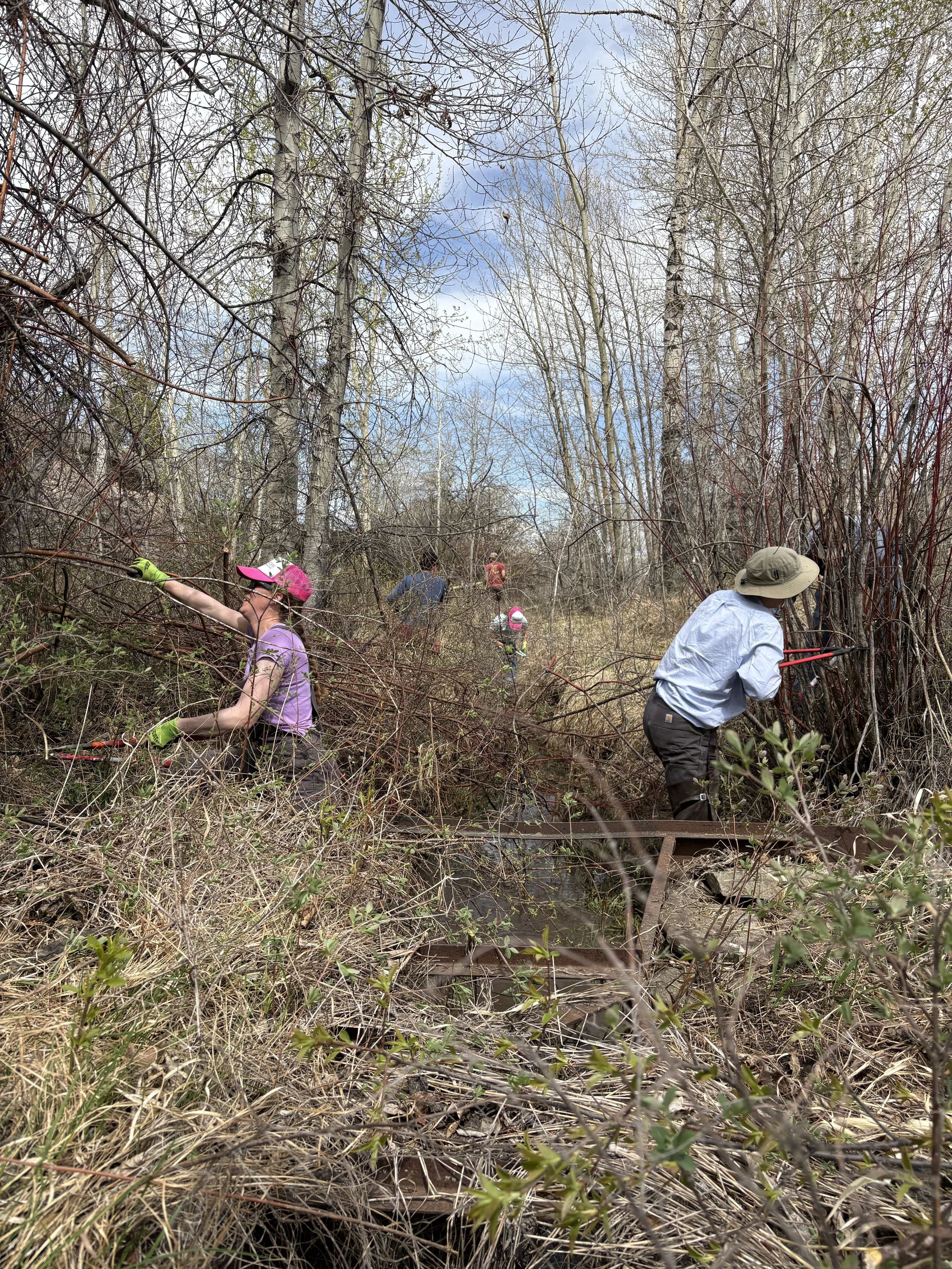
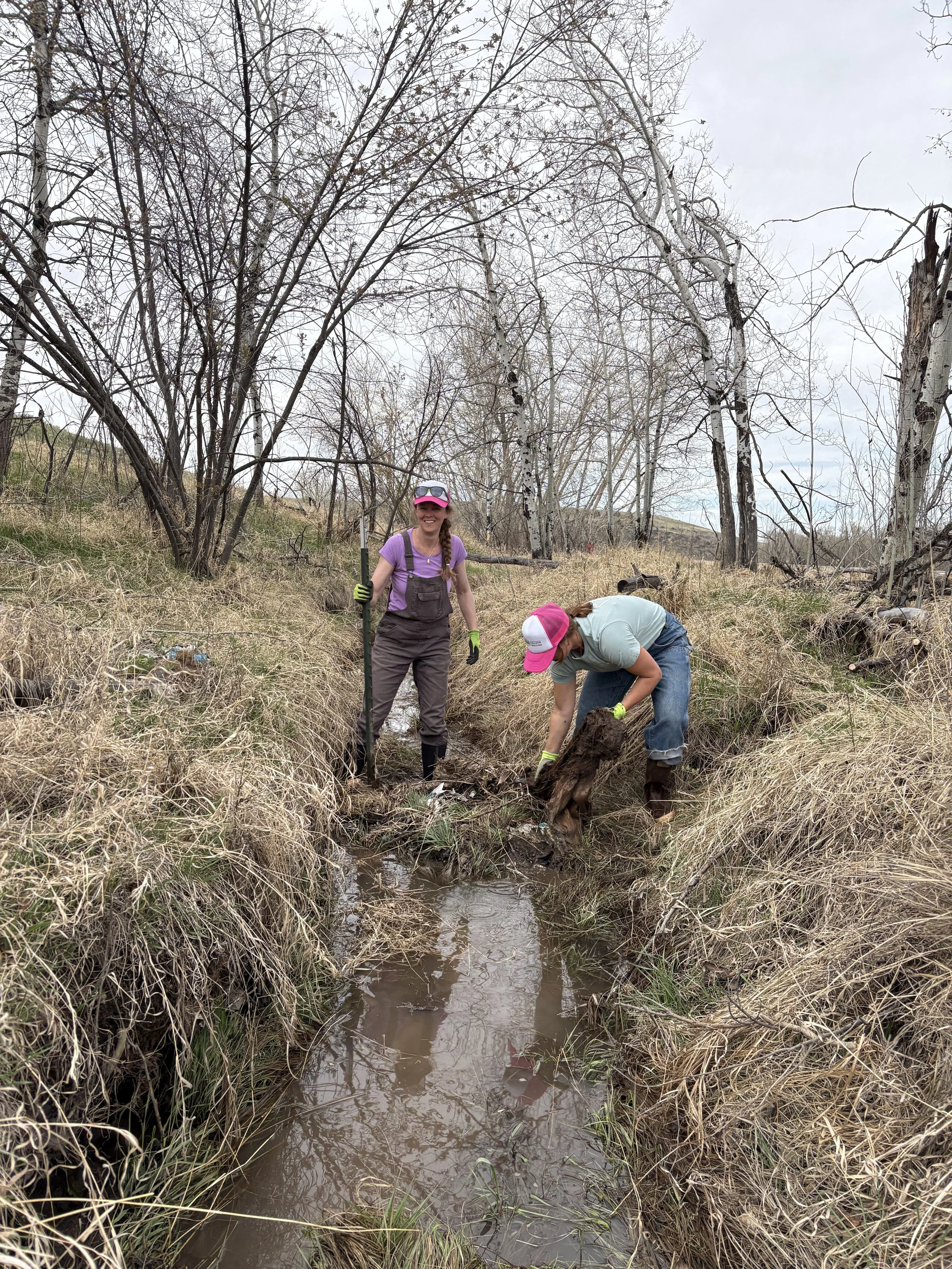
Our hard working volunteers cleaning out Gabriel Ditch
With our field season slowing down for the moment, we are reflecting on some of our favorite experiences this spring. We can’t stop thinking about one event in particular; Pitch in for the Ditch. Back in April, we teamed up with the Association of Gallatin Agricultural Irrigators to learn more about the ditches that serve the Gallatin Valley and to pitch in to clean some of those very ditches out.
Every Spring, hundreds of miles of irrigation ditches are cleared out before water is sent to farms and ranches across the valley. It’s vital to the health of the ditch network to keep the ditches clear of debris so that water is conveyed without risk of pollution, erosion, or flooding.
The ditches that weave through our valley are unsung heroes. Not only do they sustain productive farms and ranches in the Gallatin Valley, but they also recharge our groundwater, helping our Valley stay lush and green and more resilient to wildfire during our dry summer months. Additionally, while watering their crops and fields, our local irrigators work to balance keeping in-stream flows available for wildlife.
This spring, 12 volunteers joined us to clear out a section of the Gabriel Ditch. First, we walked along the ditch learning a little bit about the history of the landscape, ditch infrastructure, and current management. Then we got to work!
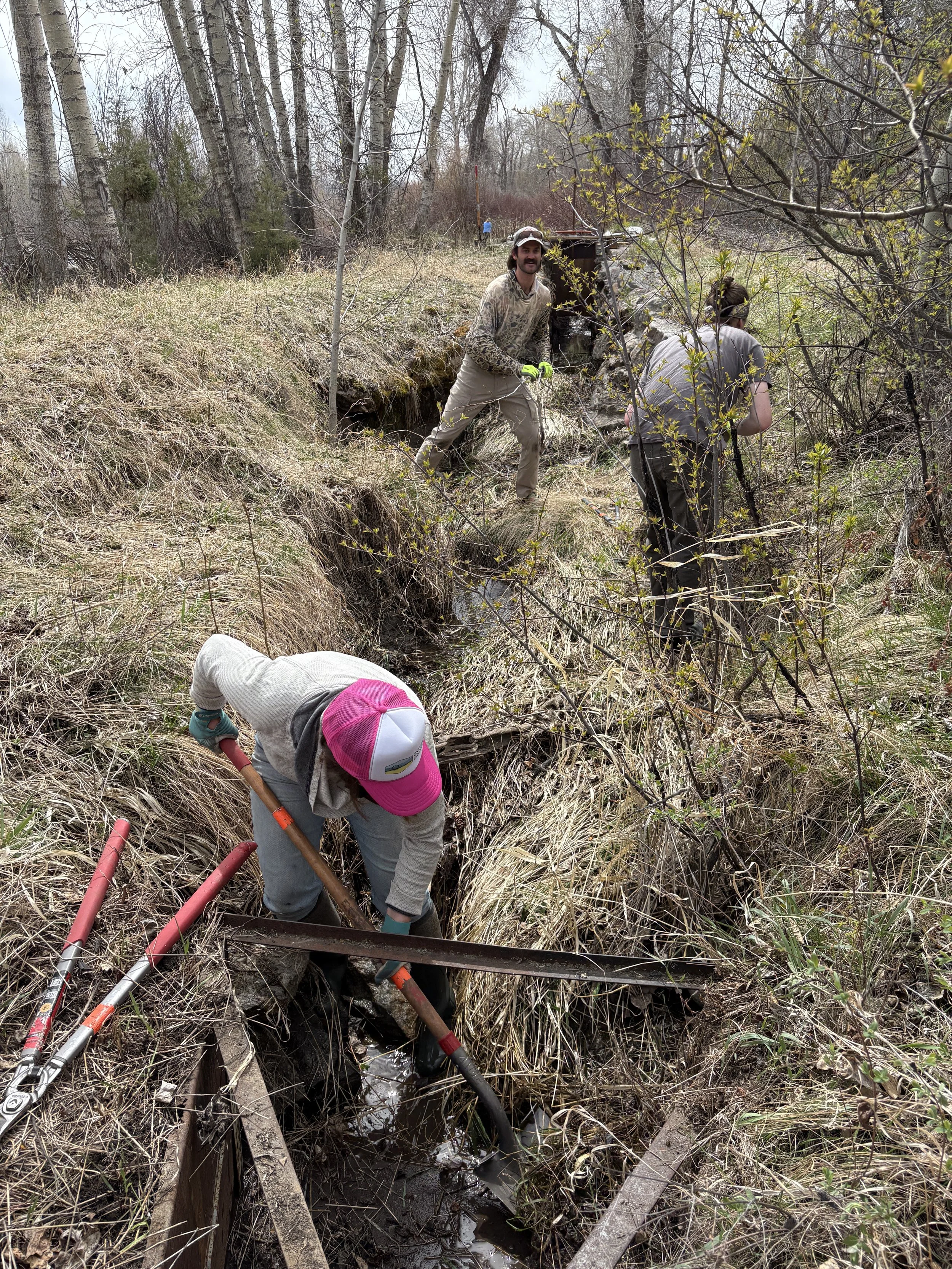
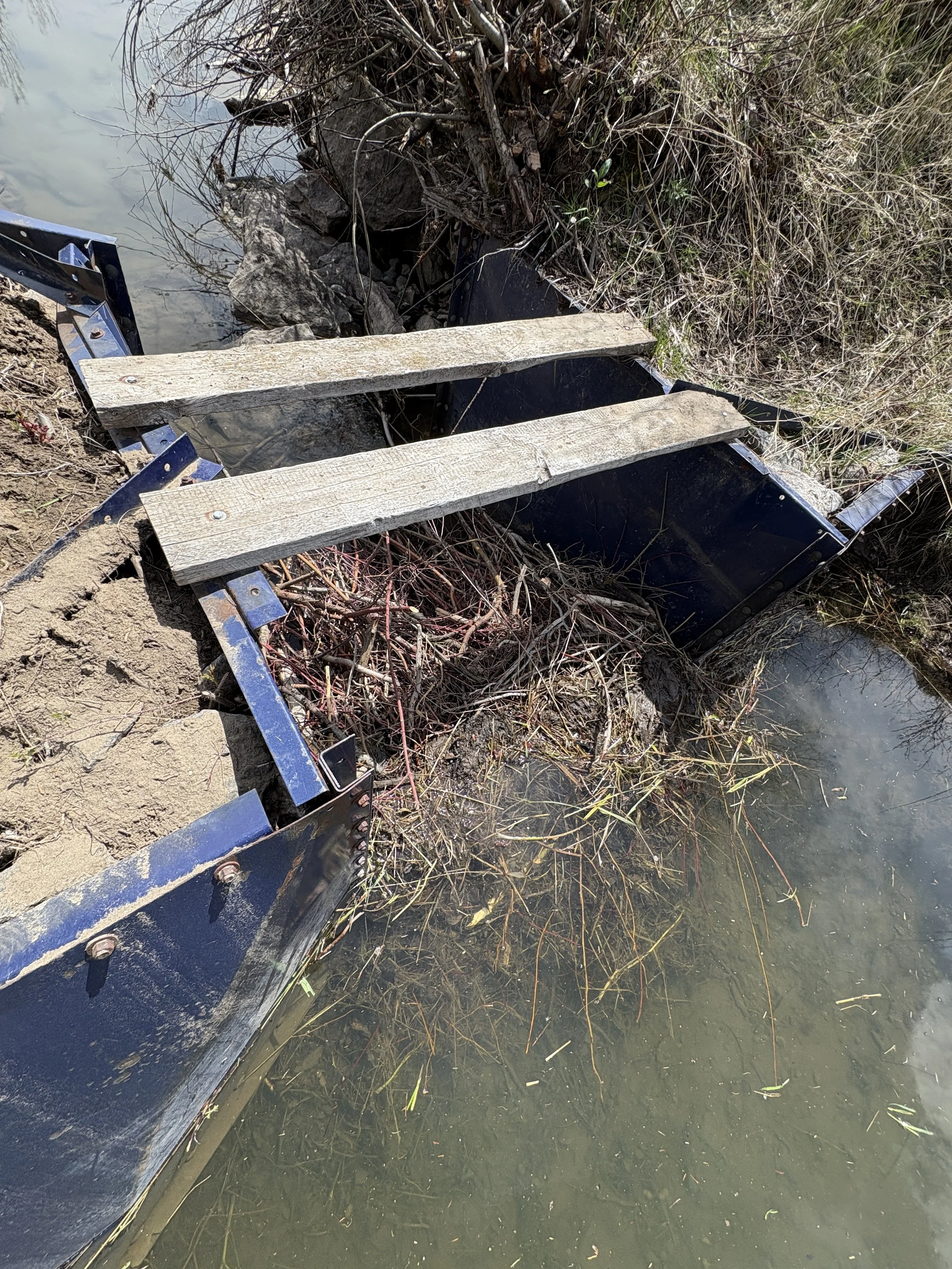
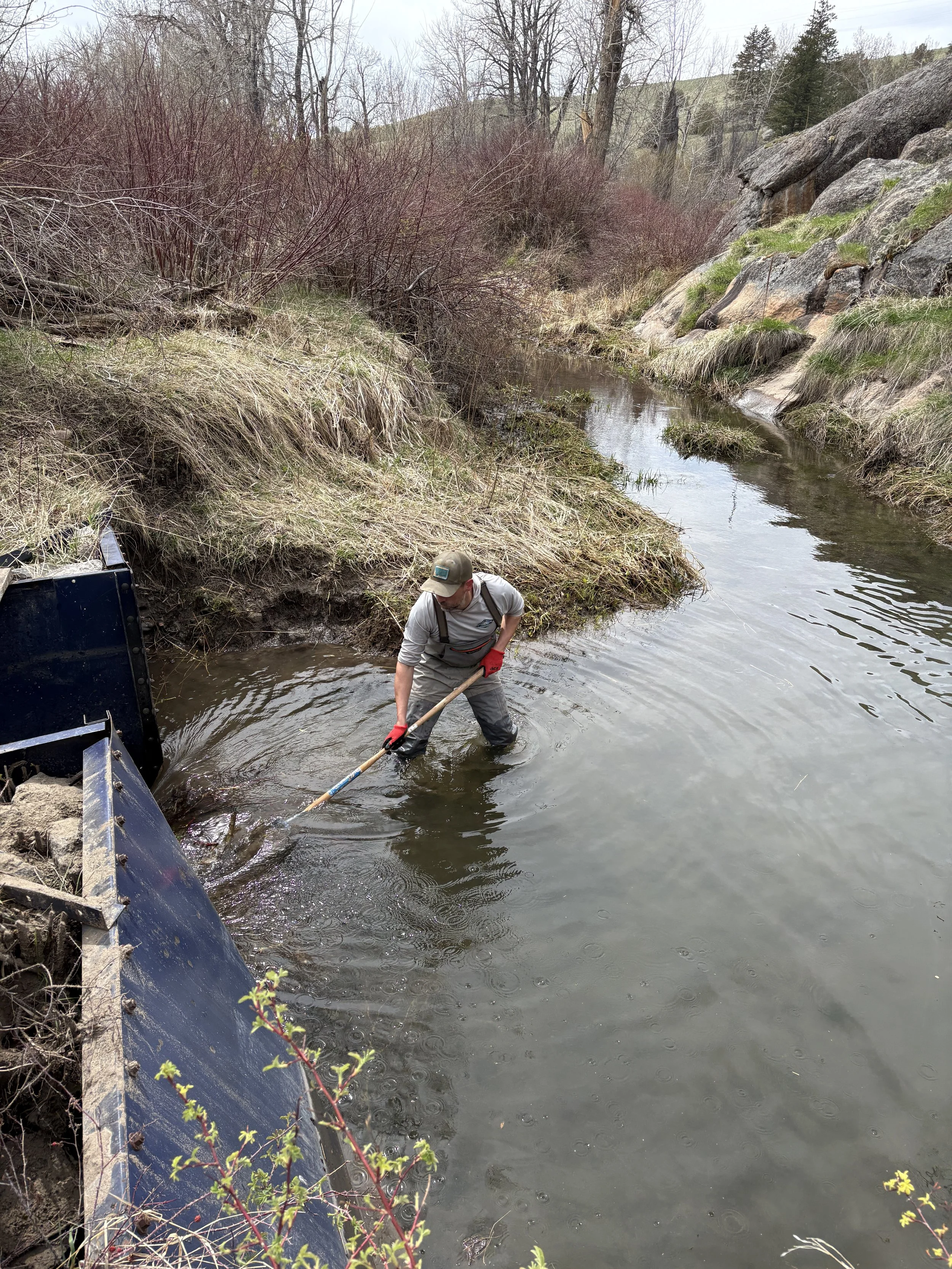
The first thing we addressed was a beaver-clogged blow-off. Packed with mud and branches, we had to dig and haul out piles of debris upslope so it couldn't be repurposed by the local rodent engineers. With the overflow outlet cleared, we started working our way up the ditch - clearing out trash, overgrowth, and weeds. As we cut, dug, and weeded out the ditch, we excavated a Parshall flume that was barely visible before we started. A Parshall flume is an open channel flow measurement device that helps irrigators gauge and distribute water. In a few short hours, we had the flume functional and around a 1/2 mile of ditch cleared. We often are impressed by the work our volunteers get done.Typically on our restoration days our handy crews can get 20+ trees planted in a little under 2 hours. But the work we completed for “Pitch in for the Ditch” was on another level!
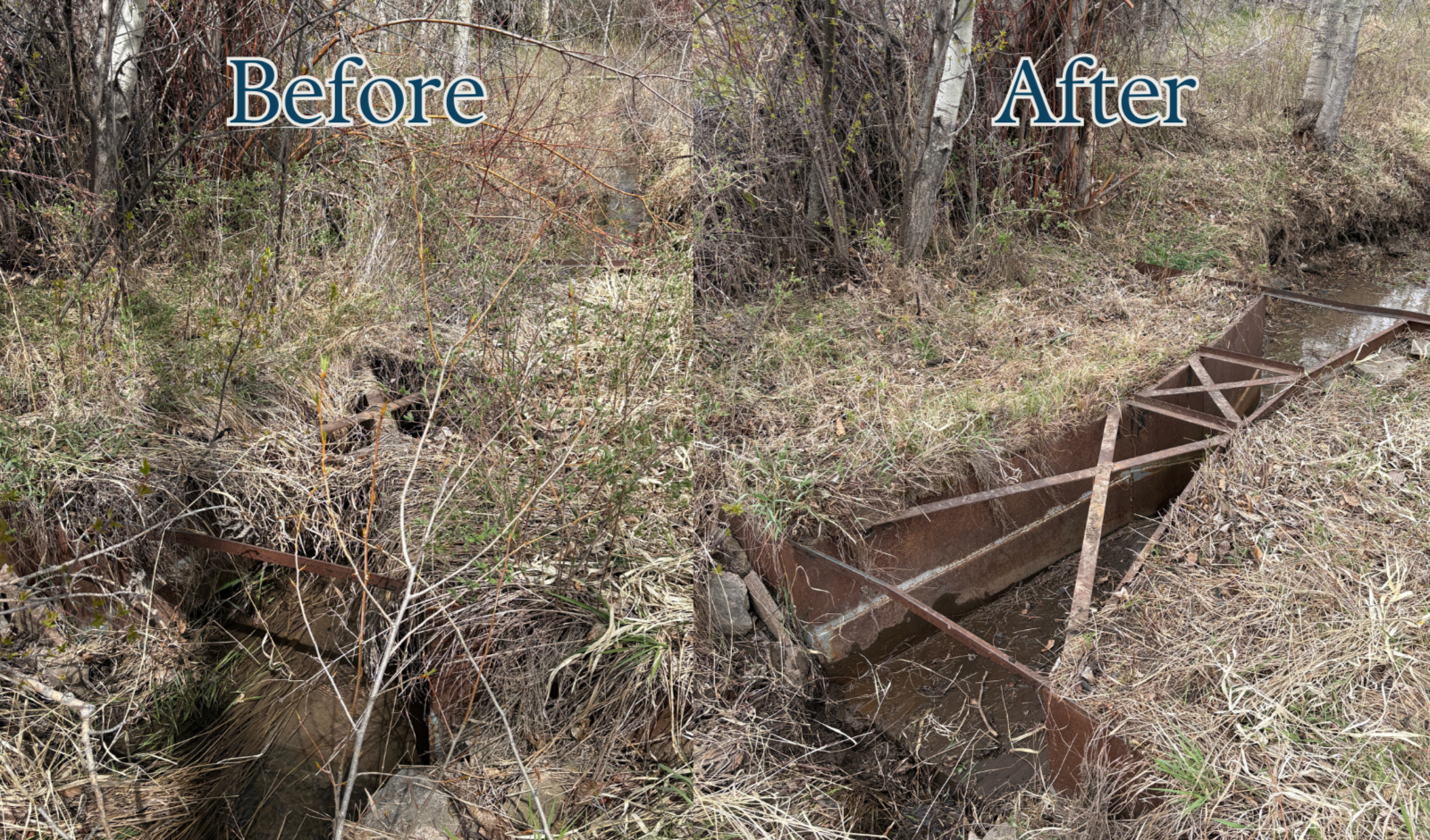
The Parshall Flume we helped uncover
As we wrapped up our work day and snacked on bars and cookies, folks reflected on the feeling of having helped out a neighbor. It felt good to know that our day’s work would provide long-lasting help for the whole irrigation season. Some also commented that the next time they drive through the valley, they would be able to recognize the ditches.
Our volunteers spent the day making a ditch more visible by removing overgrowth and debris. But they also spent the day making our ditch network more visible in their personal connection to the Gallatin Valley. We often talk about the connection to our local landscapes inspiring stewardship and community. And spending time on the river or on our trails is the first touchpoint for many. Often though, agricultural spaces get left out of this conversation. But as our day out in the field proves, a greater understanding of our ditches and irrigation network can be just as inspiring.
Written by Sarah Washko